
Uneven Tension: Why Your Stitches Look Wobbly
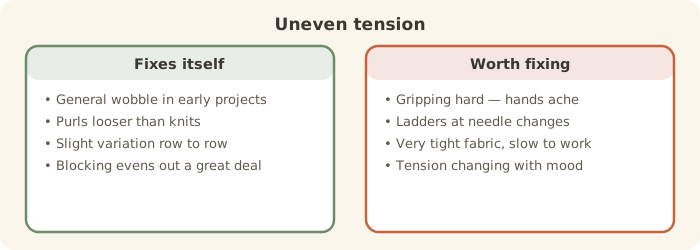
Most uneven tension is practice, not technique — it evens out with hours at the needles, and blocking hides a great deal of what remains.
The exceptions worth fixing: loose stitches at needle changes (ladders), a loose column where you switch between knit and purl, and tension that changes with your mood.
Nearly every knitter and crocheter goes through a stage of looking at their fabric and seeing every irregular stitch. It is worth saying plainly: this improves on its own, and it improves faster if you stop gripping.
The common causes
Gripping too tightly
By far the most common. Tension in the hands becomes tension in the fabric, and tight stitches are also slow and tiring to work. If your hands ache, that's the cause. Deliberately loosen and let the needles do more.
Ladders at needle changes
Working on double-pointed needles leaves loose columns where one needle meets the next. Pull the first two stitches of each needle firmly, and shift where the needles change every few rounds so the strain moves around.
Knit and purl tension differing
Most people purl slightly looser than they knit, which shows in ribbing as an uneven column. Try wrapping the purl stitch the other way, or simply accept it — blocking evens it out considerably.
Changing mood, changing tension
Knitting during a tense film really does produce tighter fabric. For anything where consistency matters, try to knit in similar conditions — and block the finished piece, which is what evens the rest.
Uneven isn't the same as wrong-sized
If the fabric looks fine but the piece is the wrong size, that's gauge rather than tension. Our gauge calculator tells you which way to change needles and can recalculate the pattern to your own gauge.
Things that help more than trying harder
- Change your needles. Metal is slippery and encourages tight knitting; bamboo and wood grip the yarn and often produce more even fabric for beginners.
- Use a smooth, light-coloured yarn while learning. Dark and fluffy yarns hide your stitches, so you can't see what your hands are doing.
- Block everything. Wet blocking evens out an enormous amount of irregularity, especially in wool.
- Knit more. Unhelpful and true. Tension settles somewhere around the second or third project for most people.
Compare like with like. Judging your fabric against a professional photograph of a blocked, steamed, professionally lit sample is a losing game. Compare your current work with your first project instead — the difference is usually striking.
When it's worth changing technique
If tension is consistently very tight and your hands hurt, it's worth trying a different knitting style — continental, where the left hand holds the yarn, or lever knitting. Switching feels clumsy for a week and can transform both speed and comfort. It's a bigger change than most people need, though: for the majority, looser hands and more practice are the whole answer.
Questions we're often asked
Will my uneven knitting even out?
Yes, for most people, within the first few projects. Blocking also evens out a great deal of what remains, particularly in wool.
Why are my purl stitches looser than my knits?
Most people wrap purl stitches with slightly more yarn. It's very common, shows most in ribbing, and largely disappears after blocking.
How do I stop ladders when knitting in the round?
Pull the first two stitches after each needle change firmly, and move the changeover point every few rounds so the strain doesn't fall in the same columns.