
Starting Cross Stitch: What You Actually Need to Buy
Cross stitch is among the cheapest crafts to begin and one of the easiest to overspend on. Here is what genuinely matters at the start, and what can wait until you know you love it.
The short list
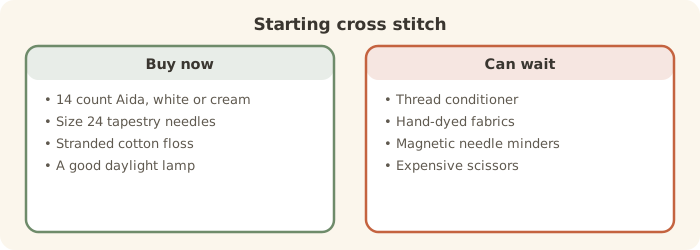
- 14 count Aida — the standard fabric, with clear holes that show you exactly where each stitch goes. White or cream to begin with.
- Tapestry needles, size 24 — blunt-tipped, so they slip through holes rather than splitting threads.
- Stranded cotton floss — DMC and Anchor are the two you'll see referenced in every pattern.
- A hoop or Q-snap frame — keeps the fabric evenly taut, which keeps your stitches even.
- Small sharp scissors — for floss only, never paper.
- A good lamp — the one thing worth spending real money on. More on that below.
Work out your fabric before you buy it
Our cross-stitch fabric calculator takes the stitch count from any chart and tells you the finished size on every fabric count, plus exactly what size to cut once margins are added.
Understanding the count
The count is how many stitches fit in an inch. 14 count Aida gives fourteen — comfortable to see and the size most kits assume. 11 count is larger and easier again, and a very sensible choice if your eyes prefer it. 18 count is finer and slower. None is better; they simply produce different sizes from the same chart, which our guide to Aida counts explains in full.
How many strands?
Floss comes as six strands loosely twisted together, and you separate out what you need. On 14 count use two strands for full cross stitches and one for backstitch outlines. On 11 count use three; on 18 count one or two. Separate the strands fully and lay them back together — it makes stitches sit flatter and look noticeably neater.
Buy the lamp before the fancy fabric. A daylight-balanced bulb positioned over your shoulder does more for enjoyment and accuracy than any other purchase in this craft. Eyes need roughly three times more light at sixty than at twenty — that's ordinary biology, not a failing, and the answer is a better lamp rather than squinting.
Things you can safely skip at first
Thread conditioner, expensive scissors, magnetic needle minders, laying tools and hand-dyed fabrics are all lovely and none is necessary. Buy them later as small treats once you know cross stitch has stuck.
Starting your first piece
- Find the centre of both the fabric and the chart, and start there. Nearly every chart marks its centre with arrows.
- Bind the fabric edges with masking tape or a quick zigzag to stop them fraying while you work.
- Keep all your top stitches slanting the same way — it matters far more to the finished look than perfect tension.
- Don't knot the back. Use a loop start or run the tail under a few stitches.
- Leave three inches of spare fabric on every side, so the piece can be framed later.
Washing and finishing
Even careful hands leave marks over weeks of work. Wash the finished piece gently in cool water with a little mild detergent, roll it in a towel to remove the water, then press face-down on a soft towel so the stitches aren't flattened. It makes a bigger difference to the final look than most beginners expect.