
How Many Granny Squares Do I Need for a Blanket?
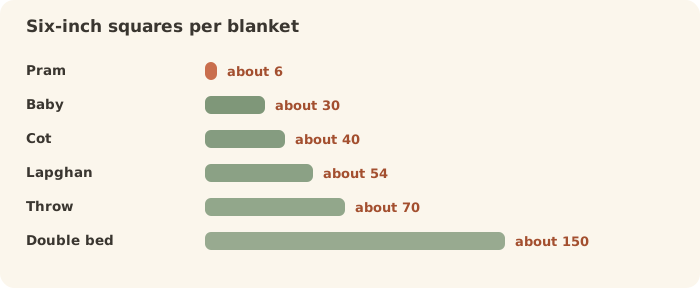
The quick answers, for six-inch squares joined with a slip stitch: a baby blanket takes about 30, a lapghan about 60, a generous throw about 70, and a double bed blanket around 150. But the honest answer depends entirely on one number — the actual size of your squares.
Measure your own square first
A "six inch granny square" made by six different people comes out anywhere between five and seven inches. That isn't a mistake; it's gauge, and it's personal. Make one square, block it if you plan to block the blanket, and measure it honestly before working out anything else.
Get this wrong and the error multiplies. Squares that come out at 5½ inches instead of 6 make a ten-square-wide blanket five inches narrower than planned — enough to unbalance the border and leave a cot blanket that doesn't quite tuck in.
Plan the whole blanket in one go
Our blanket and granny square planner takes your square size, joining method and border width and gives you the square count, the layout, the finished size, the yarn needed and a rough making time — with a picture of the layout.
Standard blanket sizes
- Pram or car seat — 14 × 16 inches
- Baby blanket — 30 × 35 inches
- Cot or toddler — 36 × 52 inches
- Lapghan — 40 × 60 inches
- Throw — 50 × 65 inches
- Single bed — 66 × 90 inches
- Double bed — 80 × 90 inches
Bed blankets are usually made to hang over the sides, so measure the mattress and add the drop you want rather than trusting the label on the bed.
The joining you choose changes the size
This catches people out. Whip stitching squares edge to edge adds nothing to the finished measurements. A single crochet join adds around a quarter inch between every pair of squares; a decorative lacy join can add three quarters. Across ten squares that's over seven inches of extra width — more than a whole extra column.
Choosing a square size
Small squares of three or four inches make a beautifully detailed patchwork and devour odd scraps, but there are a great many of them and an enormous amount of joining. Large squares of eight or twelve inches grow satisfyingly fast and suit bold simple designs. Six inches is the popular middle ground: a throw needs around seventy, which feels achievable without being fiddly.
Weave in ends as you go. Fifty squares in three colours can mean three hundred tails. Crochet over your ends while working the next round, and finish each square completely before starting the next. A pile of finished squares is a pleasure; a pile of unfinished ones with tails hanging is how blankets end up in bags for years.
Laying out the colours
Make all the squares first, then lay them out on a bed or a clear floor and shuffle until the arrangement pleases you. Resist joining anything until you're happy. Photograph the final layout on your phone before you pick it up — if the cat, the children or a draught disturbs the pile, you'll be very glad of that picture.
How long will it take?
A plain six-inch double crochet square takes most people around fifteen to twenty minutes once they're in the rhythm. Seventy of those is roughly twenty hours, plus joining and border. A throw is therefore a few weeks of evenings rather than a weekend — worth knowing before you promise one as a birthday present.