
Choosing a Candle Wick: Sizes, Types and Testing
You can get the wax, the fragrance and the vessel exactly right and still make a poor candle, because the wick controls everything about how it burns. It's also the component with no shortcut: you have to test.
Wick size follows container width
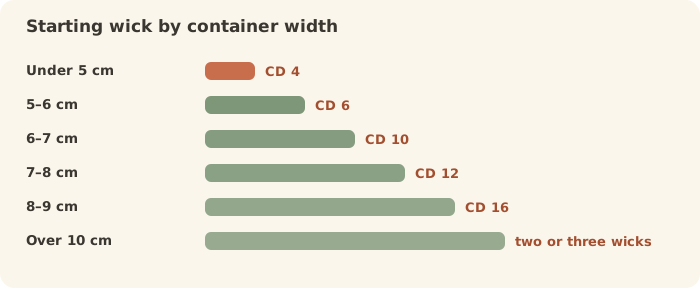
The wick has to produce a melt pool that reaches the edges of the container within about two hours. Too small and the candle tunnels; too large and it smokes and burns hot. As a starting point for soy in a straight-sided jar:
- Under 5 cm across — CD 4
- 5–6 cm — CD 6
- 6–7 cm — CD 10
- 7–8 cm — CD 12
- 8–9 cm — CD 16
- Over 10 cm — two or three wicks rather than one large one
Start with the right quantities
Our candle wax calculator gives the wax weight, fragrance oil and a starting wick suggestion for any container, including tapered jars and teacups.
The main wick families
- CD — flat braided cotton with paper filaments. Reliable in soy and the usual recommendation for beginners.
- ECO — similar, with a slight curl that helps self-trim. Good in soy and coconut blends.
- LX — flat braided, stable flame, popular in paraffin.
- Wooden — the ones that crackle. Lovely, but far fussier: they need a thicker wax, a shorter trim, and they fail to stay lit more often.
- HTP — self-trimming, suits containers and gels.
Why a chart isn't enough
Wick performance changes with the wax, the fragrance oil, any dye, and the shape of the vessel. Fragrance in particular thickens the wax and can make a wick that worked plain suddenly struggle. This is why every maker tests, and why nobody can tell you your wick size with certainty.
Change one thing at a time. Pour three identical candles with three different wick sizes and burn them side by side. Testing one variable at a time gives you a reliable recipe in a few pours; changing wick, fragrance and pour temperature together tells you nothing.
How to test properly
Let the candle cure fully first — one to two weeks for soy. Then burn for four hours and watch: the melt pool should reach the edges within about two hours and be roughly 1 cm deep, the flame should be steady at around 2 cm, and there should be no soot on the glass and no mushrooming on the wick tip.
A large flame with black smoke means going down a size. Unmelted wax at the edges after four hours means going up.
Trimming
Trim to about 5 mm before every single burn, including the first. This is the easiest habit in candle making and it prevents most soot complaints, most mushrooming, and most oversized flames.
Questions we're often asked
What size wick for an 8 oz candle jar?
An 8 oz jar is usually about 7 cm across, which suits a CD 12 in soy wax as a starting point. Test before committing to a batch, as fragrance and dye both affect the burn.
Why does my candle tunnel?
The wick is too small for the container, or the first burn was too short. Wax has a memory — let the first burn run until the melt pool reaches the edges.
Are wooden wicks harder to use?
Yes. They need a thicker wax to support them, a shorter trim of around 3 mm, and they go out more readily than cotton. Lovely when they work, but not the place to start.