
Setting Up a Craft Corner in a Small Space
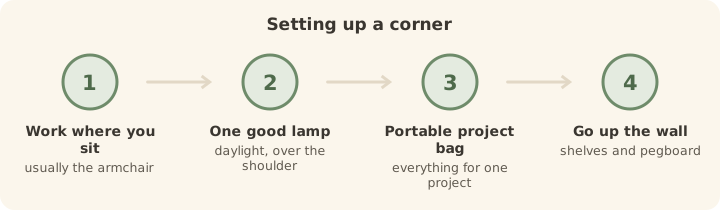
Aim for a vertical, portable and enclosed setup: storage that goes up a wall, a trolley or basket that carries the current project to wherever you sit, and closed containers so nothing needs tidying before guests arrive.
Good task lighting matters more than any amount of furniture.
Building the corner
Choose where you'll actually work
Most people don't craft at a dedicated desk — they craft in the armchair with the television on. Set up around where you genuinely sit rather than where you imagine you should.
Get one good light
A daylight-balanced lamp positioned over your shoulder, not in front of you. This single purchase does more for comfort and accuracy than anything else in the room.
Make the current project portable
A project bag or a small trolley holds everything for one project — yarn, needles, pattern, scissors, notes. Moving the whole thing takes one hand and nothing gets lost between sessions.
Go up the wall
Floating shelves, pegboard, over-door organisers and hanging pockets all use space no furniture reaches. Pegboard is the most flexible: hooks and small shelves rearrange as your crafts change.
Know what you own before you buy storage
Log your stash first — our stash inventory printable gives you a row per yarn with weights and yardage, which tells you how much storage you actually need.
Storage that suits each craft
| Craft | What works | Avoid |
|---|---|---|
| Yarn | Clear lidded boxes sorted by weight | Open baskets in sunlight |
| Needles and hooks | A labelled roll or case | A jar, where nothing is findable |
| Beads | Compartment boxes with tight lids | Bags — one drop and it's everywhere |
| Fabric | Folded on shelves, upright like books | Deep stacked piles you can't see into |
| Threads and floss | Bobbins in a labelled box | Loose skeins in a drawer |
Store by how you shop, not by how it looks. Yarn arranged by colour is beautiful and useless — you almost always start a project knowing the weight you need. Sorting by weight answers the question you'll actually ask.
Comfort matters more than the setup
A chair with arms so your elbows rest, the work held up near chest height rather than down in your lap, and a break every hour. It's tempting to spend on storage and nothing on the seat, and the seat is where you'll spend the time.
The habit that keeps it working
Put things away between sessions, and finish one project before starting the next where you can. A craft corner fails not because it's small but because five half-finished projects colonise it. One in progress, one in the bag, and the rest properly stored.
Questions we're often asked
How do I set up a craft space in a small flat?
Work with where you already sit, use vertical storage such as pegboard and shelves, and keep the current project in a portable bag or trolley so nothing has to stay out.
What lighting is best for crafting?
A daylight-balanced bulb in an adjustable lamp positioned over your shoulder, so it lights the work without casting your own shadow onto it.
Should I sort yarn by colour or weight?
By weight. Patterns specify a weight, so that's the question your storage should answer. Colour sorting looks lovely and helps far less in practice.