
Sewing Machine Tension and Needles: Fixing Bad Stitches
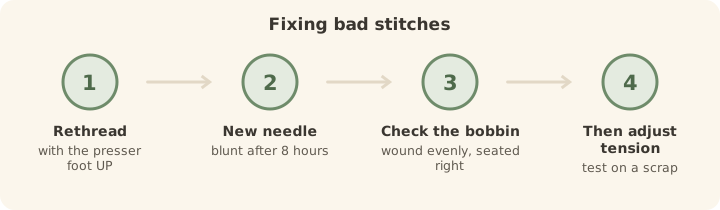
Before adjusting tension dials, rethread the machine completely with the presser foot up and put in a new needle. That fixes the majority of stitch problems on its own.
Loops on the underside usually mean the top thread is wrong, not the bobbin — the top thread isn't seated in the tension discs.
The four-step check
Rethread with the foot up
The tension discs only open when the presser foot is raised. Threading with it down means the thread never seats between them, which produces loose, looping stitches underneath — and it's the single most common cause.
Change the needle
Needles blunt after about eight hours of sewing and cause skipped stitches, snagging and noise. They cost pennies. Change it before you change anything else, and check it's the right type for your fabric.
Check the bobbin
Wound evenly, inserted the right way round, and seated properly in its case. An unevenly wound bobbin causes tension that varies as you sew, which looks baffling until you find it.
Only now adjust tension
Test on a scrap of the actual fabric, doubled. Move the dial in small steps and sew a line after each. Higher numbers tighten the top thread; lower numbers loosen it.
Matching needle to fabric
| Fabric | Needle | Size |
|---|---|---|
| Quilting cotton | Universal or Sharp | 80/12 |
| Jersey and knits | Ballpoint or Stretch | 75/11 |
| Denim and canvas | Jeans | 90/14–100/16 |
| Silk and fine cotton | Microtex Sharp | 60/8–70/10 |
| Leather and vinyl | Leather | 90/14 |
Skipped stitches on jersey are a needle problem, not a tension problem. A sharp needle pierces the knit loops and cuts them; a ballpoint needle pushes between them. No amount of tension adjustment fixes the wrong needle type.
Reading the stitch
A balanced stitch shows the same appearance on both sides, with the threads meeting in the middle of the fabric. Loops on the underside mean the top tension is too loose or the machine is mis-threaded. Loops on top mean the bobbin tension is too loose — but check the top thread first, because it's far more often the culprit despite appearances.
The maintenance nobody does
Lint builds up under the needle plate and around the bobbin case, and it changes tension gradually until stitches misbehave for no apparent reason. Take the plate off and brush it out every few projects. Don't use compressed air, which pushes lint deeper into the machine.
Questions we're often asked
Why is my sewing machine looping underneath?
The top thread almost always. Rethread the machine completely with the presser foot raised so the thread seats in the tension discs properly.
How often should I change my sewing machine needle?
Roughly every eight hours of sewing, or at the start of every significant project. Blunt needles cause skipped stitches, snagged fabric and a louder machine.
Which way should tension go for thick fabric?
Usually slightly looser on the top, with a larger needle and a longer stitch length. Always test on a doubled scrap of the same fabric before sewing the real thing.