
How Much Binding, Backing and Batting Does a Quilt Need?
Quilting is generous with pleasures and stingy with arithmetic. Most of it is straightforward until you reach the fabric shop with a finished top and no idea how much backing to buy. Here are the three calculations, in the order you'll need them.
Binding: it's about the perimeter
Measure right around the quilt — twice the width plus twice the length — then add about ten inches for turning the four corners and joining the strip ends. Divide that total by the usable width of your fabric, which is around 40 inches once selvedges are trimmed, and round up. That's how many strips to cut.
For a 60 by 80 inch quilt: the perimeter is 280 inches, plus ten is 290, divided by 40 gives 7.25 — so eight strips. At 2½ inches wide that's 20 inches of fabric, or a little under ⅝ of a yard.
All three sums at once
Our quilt binding, backing and batting calculator takes your quilt measurements and returns the strips to cut, the backing yardage with the seaming worked out, and which pre-cut batting package to buy.
What width to cut binding strips
2½ inches is the standard for double-fold binding and gives a finished binding of about ⅜ inch. Cut 2¼ inches if you prefer a narrower, tighter finish, and 2¾ or 3 inches if your batting is thick and lofty and needs more to wrap around.
Join strips on the diagonal rather than straight across: lay two ends at right angles, right sides together, sew corner to corner, trim and press the seam open. The bulk then spreads across the width instead of forming a lump you'll feel every time you handle that spot.
Backing: bigger than you think
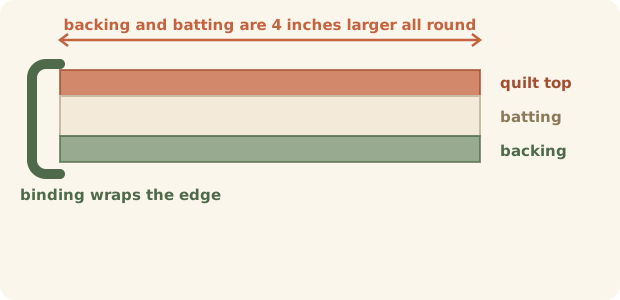
Your backing must be larger than the quilt top on all four sides. Two inches extra per side is enough if you're quilting it yourself on a domestic machine. Four inches is standard if a longarm quilter is doing it, since they need fabric to clamp onto the frame — and some ask for six. Always check with your quilter before cutting.
Standard quilting cotton gives about 40 usable inches, so anything larger than a lap quilt needs the backing pieced from two or three panels. Which direction to seam depends on the quilt's proportions, and it genuinely matters: choosing the wrong orientation can cost you a full extra yard.
Extra-wide backing is worth pricing up. At 108 inches wide it costs more per yard, but you buy far fewer yards and skip the seaming entirely — no matching, no long pressed seams, and no lump running down the middle of the quilt back.
Batting: buy the package or the yard
Batting comes both on the roll and in pre-cut packages named for bed sizes — craft, crib, throw, twin, full, queen, king. If your quilt plus overhang fits inside a package, that's almost always the cheaper option. Do check the printed measurements, as they vary between brands by an inch or two, which is exactly enough to matter.
Buy a little extra of everything
Binding especially. It is the very last stage of a quilt that has taken weeks, and discovering you are three inches short at that moment is one of quilting's small tragedies. An extra quarter yard costs very little and rarely goes to waste — it becomes the label, a scrappy border, or the start of the next project.