
Fixing Common Knitting Mistakes Without Unravelling Everything
Almost nothing in knitting is unfixable, and almost nothing needs the whole piece pulled out. Here are the five problems that account for most panics, and what to do about each.
A dropped stitch
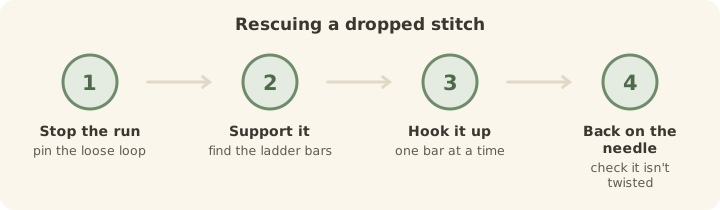
A stitch has slipped off and is running down the fabric like a ladder. Don't pull the work — that makes it run further. Slip a stitch marker or a safety pin through the loose loop to stop it, then pick it up with a crochet hook: insert the hook front to back through the loop, catch the horizontal bar above it, pull it through. Repeat up the ladder.
In purl fabric, work from the back of the piece, where it becomes a knit stitch and behaves the same way.
A twisted stitch
One stitch looks tighter and sits crossed at its base. It happened when the stitch was mounted the wrong way round on the needle and then worked. Slip it off, turn it round and put it back — no unravelling required. If it's several rows down, drop it deliberately to that row, then ladder it back up correctly.
Knit where you should have purled
A bump in your smooth stocking stitch. If it's within a few rows, drop just that column down to the error, then use a crochet hook to work it back up, purling instead of knitting where needed. Fixing one stitch rather than a thousand is one of knitting's great pleasures.
If the whole piece is the wrong size
That's not a mistake to unpick — it's a gauge problem. Our gauge calculator will tell you which way to change needles, and can recalculate the pattern's stitch counts to your own gauge so the next attempt comes out right.
Too many or too few stitches
Count carefully to find where. An extra stitch usually means an accidental yarn over, or a stitch worked twice at the row edge. A missing one usually means two worked together. If you can see the culprit within a few rows, drop and fix that column; if not, work an extra decrease or increase discreetly at the row edge on the next row and carry on. Nobody will ever see it.
Use a lifeline. Thread a length of smooth contrasting yarn through all the stitches on your needle every twenty rows or so, especially in lace. If you ever have to rip back, you rip to the lifeline and every stitch is waiting for you, right way round. It takes two minutes and has saved more projects than any other habit.
When you do have to rip back
Take the work off the needles and pull gently, one row at a time, then pick the stitches back up with a needle two sizes smaller — they slip on far more easily. Work the next row with your proper needle. If any stitch is mounted backwards, simply knit into the back of it to straighten it.
Questions we're often asked
How do I pick up a dropped stitch?
Secure the loose loop with a safety pin, then use a crochet hook: insert it through the loop, catch the ladder bar above, and pull it through. Repeat until you reach the needle, then place the stitch back on.
What is a lifeline in knitting?
A length of smooth waste yarn threaded through every live stitch on your needle at a known point. If you have to rip back, the lifeline holds all the stitches so you can put them back on the needle easily.
Can I fix a mistake several rows down?
Yes. Drop that one column of stitches deliberately down to the error, correct it, then use a crochet hook to work the column back up. You only ever disturb one stitch's width of fabric.