
Yarn Weights Explained: DK, Worsted, 8 Ply and All the Rest
Few things confuse new knitters more than yarn weight, and it isn't their fault. The same ball of yarn might be called DK in Britain, light worsted in America, 8 ply in Australia and Category 3 on the label — and none of those names tells you anything obvious about the others.
First, "weight" doesn't mean heaviness
This is the misunderstanding at the root of it all. Yarn weight refers to the thickness of the strand, not how much the ball weighs. A 100 gram ball of lace yarn and a 100 gram ball of chunky weigh precisely the same and are utterly different yarns. The lace ball will simply contain a great deal more yarn.
The names, side by side
- Lace — 2 ply, cobweb, Category 0. Very fine, for shawls and delicate work.
- Fingering — 4 ply, super fine, Category 1. The classic sock yarn.
- Sport — 5 ply, fine, Category 2. Light garments and baby knits.
- DK — 8 ply, light worsted, Category 3. Perhaps the most versatile weight there is.
- Worsted — Aran, 10 ply, medium, Category 4. Jumpers, hats, blankets.
- Chunky — bulky, 12 ply, Category 5. Quick, cosy projects.
- Super chunky and jumbo — Categories 6 and 7. Arm knitting and statement blankets.
Note that DK and worsted are neighbours but not the same: DK is slightly finer. Substituting one for the other will change your finished size, which is why swatching matters.
Identifying a ball with no label
Every crafter has a basket of orphans — beautiful yarn, no band, no idea. The traditional answer is wraps per inch, a method spinners have used for generations and one that needs nothing more than a pencil.
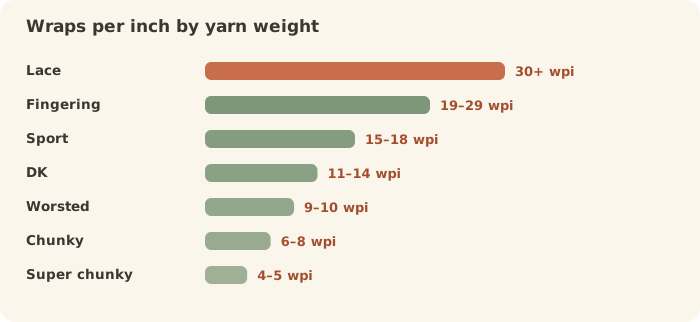
Wind the yarn around a pencil or knitting needle in a single neat layer, with the strands just touching but not squashed, then count how many fit within one inch. Around 30 wraps means lace; 12 means DK; 8 or fewer means chunky.
Count your wraps against a true inch
Our mystery yarn identifier draws a genuinely accurate one-inch ruler on your screen. Count your wraps against it, tap the number, and you'll get the yarn weight in every naming system along with the needle and hook sizes it wants.
Wrap gently
The one thing to watch is tension. If you pull the yarn tight as you wrap, the strands compress, you count too many, and the yarn appears finer than it truly is. Let each strand rest against its neighbour and no more — it should look like a row of yarn sitting comfortably, not a tightly bound spool.
Substituting yarns
Once you know the weight, you can use your mystery yarn in almost any pattern written for that weight — which is precisely how a basket of odds and ends becomes a blanket. Do knit a swatch first. Two yarns of the same weight can still behave quite differently depending on the fibre and how it's spun, and ten minutes with a swatch has rescued many a jumper from being three sizes too large.
If you need to know which needle you're holding while you swatch, our needle sizer will identify it in a moment.
How much will I need?
Roughly speaking, an adult scarf takes 400 to 600 yards of DK, a baby blanket 700 to 900, and an adult jumper anywhere from 1,000 to 1,800 depending on size and weight. If your mystery ball has no yardage either, weigh it: DK typically runs about 220 yards per 100 grams, worsted about 200, and chunky about 110.